
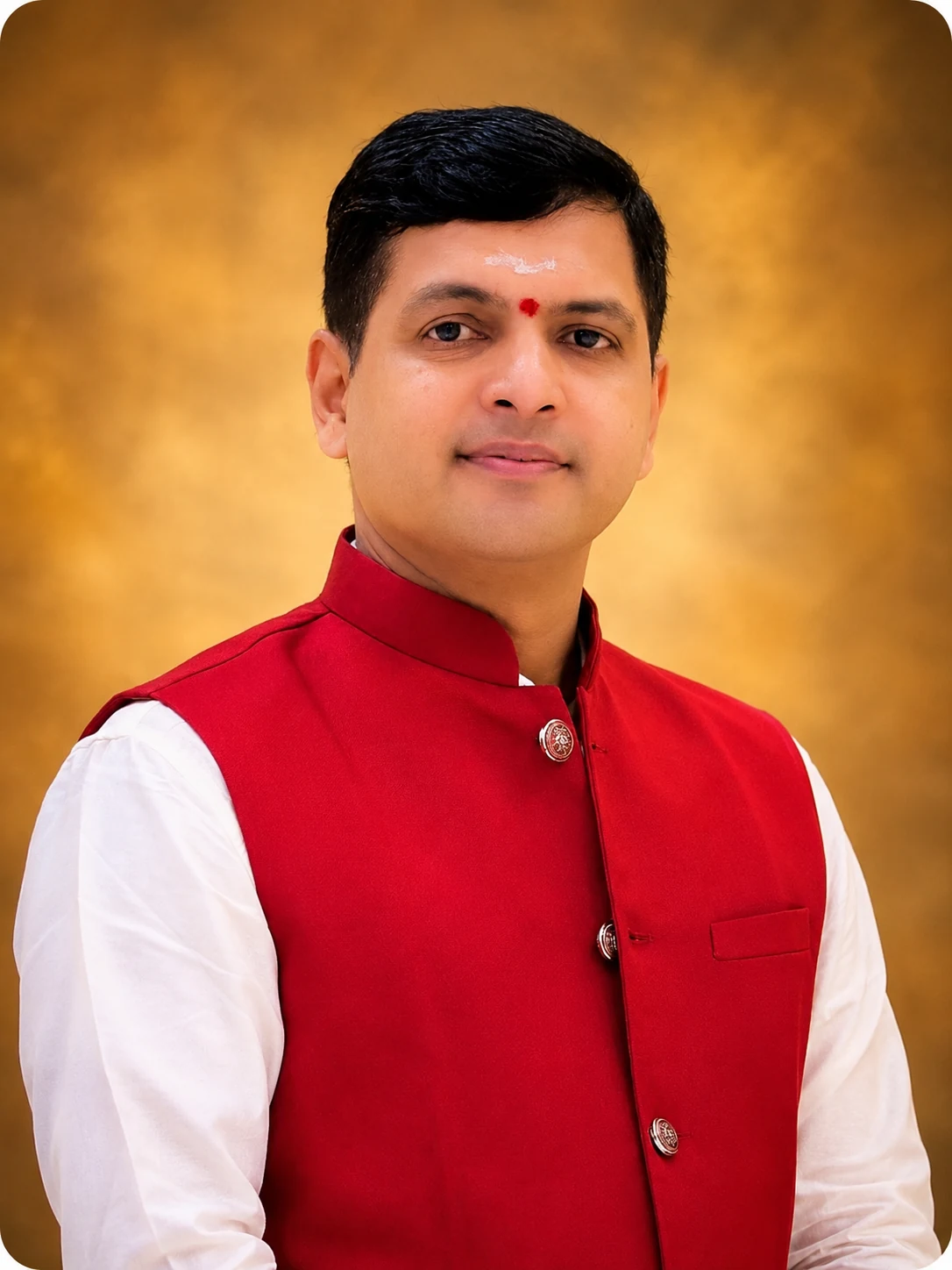
An introduction to Vedic astrology, the Panchanga and the importance of thoughtful guidance.
A festival, a family ceremony and a daily observance often bring us into contact with Jyotisha long before we study a horoscope. A tithi marked in a calendar or a muhurta chosen for a ceremony reflects a tradition of paying attention to time.
Vedic Jyotisha, commonly known as Vedic astrology, brings together several kinds of traditional knowledge. These include the calculation of celestial positions, the organisation of calendars and the interpretation of astrological patterns in relation to human life.
For a seeker, understanding these foundations gives depth to the subject. It encourages careful questions about what is being calculated, how it is interpreted and how guidance may be considered in the circumstances of one’s own life.
Jyotisha within the Vedic tradition
Jyotisha is one of the six Vedangas, the disciplines that support the study and practice of the Vedas. Traditional literature describes it as the “eye of the Veda.” This image expresses its role in recognising and organising the times of sacred observances.
The early Vedanga Jyotisha, traditionally associated with Lagadha, concerns the reckoning of time for Vedic rites. The wider Jyotisha literature also includes later mathematical and horoscopic traditions. Understanding this history helps us appreciate the different kinds of knowledge gathered under the name Jyotisha. (Vedic Heritage Portal)
Within this setting, time has a place in the rhythm of religious life. A daily practice, a seasonal observance and a family ceremony each have their own context. Learning about their timing can deepen our understanding of the practices we have inherited.
Three areas of traditional study
A common classification in the later literature names Ganita, Hora and Samhita. Interpretive astrology is also discussed under the broader term Phalita Jyotisha.
| Area | Main concern |
|---|---|
| Ganita | Mathematical astronomy: calculating celestial positions, periods of time and related phenomena. |
| Hora | Horoscopic interpretation concerning individuals and their life circumstances. |
| Samhita | A wider range of traditional observations and interpretations concerning natural phenomena, collective life and other subjects. |
Varahamihira’s Brihat Samhita refers to these three areas together. (Brihat Samhita 2.19)
This breadth matters to a student of Jyotisha. Preparing a calendar, calculating a celestial position and interpreting a horoscope involve different questions. Recognising the kind of question being asked is part of approaching the subject with care.
Why calculation and observation matter
The mathematical side of Jyotisha provides the framework for calendars and charts. Dates, times and celestial positions must be handled carefully before an interpretation is offered.
Indian astronomical works such as the Surya Siddhanta and the Aryabhatiya form part of this computational inheritance. Classical authors also valued comparison with observation. In the Brihat Samhita, Varahamihira describes competence in relating calculation to observations made with traditional instruments. (Brihat Samhita, chapter 2)
This gives us a useful principle for learning: calculations deserve examination, and differences deserve explanation. The information entered, the method used and the purpose of a calculation all matter.
An astronomical calculation establishes a position or time according to a defined method. The significance assigned to it in a horoscope belongs to astrological interpretation. Keeping these roles clear allows us to respect the mathematical work and understand the traditional framework within which the reading is offered.
The Panchanga and its five elements
The Panchanga is a traditional almanac whose name refers to five elements of calendrical reckoning. It describes time through the following measures:
| Element | Meaning |
|---|---|
| Tithi | A lunar day, defined by each 12-degree increase in the difference between the Moon’s and Sun’s zodiacal longitudes. |
| Vara | The weekday within the seven-day cycle. |
| Nakshatra | The Moon’s position within one of 27 traditional divisions of the zodiac. |
| Yoga | A calendrical measure calculated from the sum of the Sun’s and Moon’s positions in the sidereal zodiac. |
| Karana | Half of a tithi. |
A tithi can begin or end during a civil calendar day. Its duration is not fixed at 24 hours. Here, yoga is a calendrical term. (India Meteorological Department, Rashtriya Panchang)
Learning these terms helps a seeker understand what a traditional calendar is describing. It also makes conversations about festivals, observances and Muhurta more meaningful.
Why place and local time matter
For a seeker living abroad, location matters. Sunrise and other local timings depend on the place, while clock times also reflect the time zone. When comparing Panchangas, check the location, time convention and calculation method. (Rashtriya Panchang explanation)
A ritual timing should be considered for the place where the observance will take place. This is especially useful for families living across countries: a date or time received from India needs to be understood in its local context.
Give the practitioner the relevant place and date, and ask how the timing has been determined. Clear information makes the discussion more useful.
Its importance for a seeker
Understanding tradition. Jyotisha offers a way to learn about the calendars, observances and timing practices woven into Hindu life. Understanding the meaning of a tithi or the purpose of a Muhurta can bring greater awareness to practices followed within a family or community.
Making space for reflection. Within traditional horoscope interpretation, a chart provides a framework for discussing questions about temperament, relationships, responsibilities and periods of life. Such a discussion should take the seeker’s actual circumstances seriously. Listening carefully is as important to the conversation as explaining a technical term.
Approaching important occasions thoughtfully. Muhurta concerns the traditional selection of a suitable time for an undertaking or ceremony. For those who follow this practice, selecting a time expresses intention and care. Preparing well, communicating with everyone involved and understanding the responsibilities of the occasion remain essential.
Keeping personal effort central. A seeker brings judgement, experience and the ability to act. Guidance should help a person consider their situation with greater awareness. The choices we make, the work we undertake and the care we show in our relationships continue to matter.
These are useful ways to approach Jyotisha with maturity. Its study can be accompanied by questions, reflection and a willingness to understand how a conclusion has been reached.
A tradition approached with humility
Working with another person’s concerns calls for sensitivity. A practitioner has a responsibility to explain clearly, acknowledge uncertainty and respect the seeker’s freedom to decide.
Spiritual recommendations also deserve explanation. If prayer, japa (the repetition of a sacred mantra), charity or an observance is discussed, the seeker should understand its traditional purpose and be able to consider it in the light of their beliefs and circumstances.
Knowledge is shared most meaningfully through patience and care. An informed seeker should feel able to ask questions, understand the scope of the guidance and leave with a clearer sense of the matters they wish to reflect upon.
What a Jyotisha consultation involves
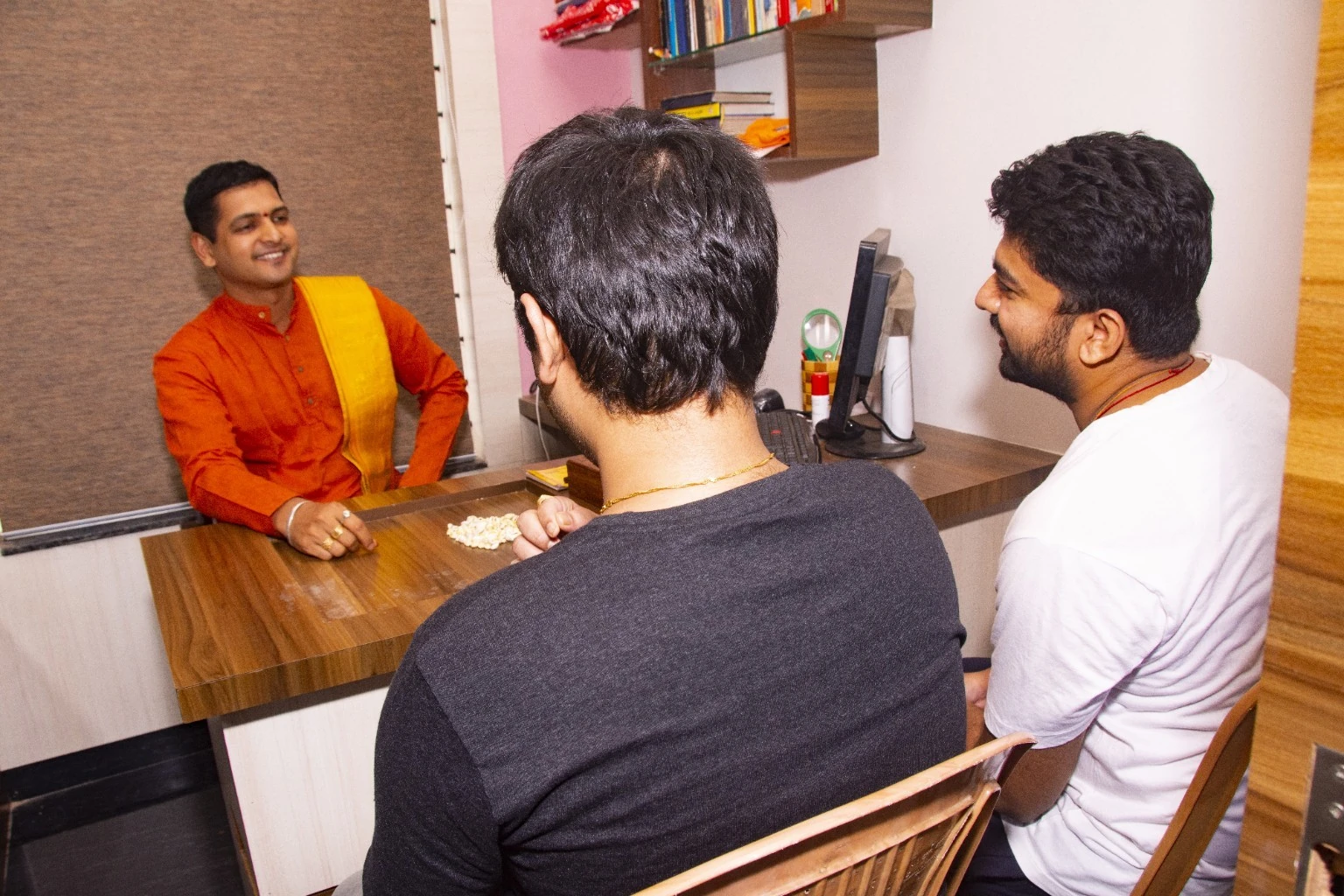
Vidwan Arun Hegde during a Jyotisha consultation.
A consultation begins with your questions and the relevant birth details—date, recorded time and place of birth. Depending on your enquiry, it may involve horoscope interpretation, traditional planetary periods and transits, compatibility, or Muhurta guidance.
The discussion includes explanations and time for questions. Where appropriate, spiritual practices may also be considered.
Please share two or three main questions and mention if your birth time is approximate or unknown. The consultation’s scope, format, fees and any report or follow-up arrangements are confirmed before booking.
Enquire about a Jyotisha consultation